
SAFE TREE REMOVAL TO PROTECT YOUR PROPERTY THIS WINTER
Winter is an important time to identify dead, dying, or structurally weakened trees that could pose a risk to your home and property. As deciduous trees lose their leaves, damaged branches, decay, and other structural concerns may become easier to spot.
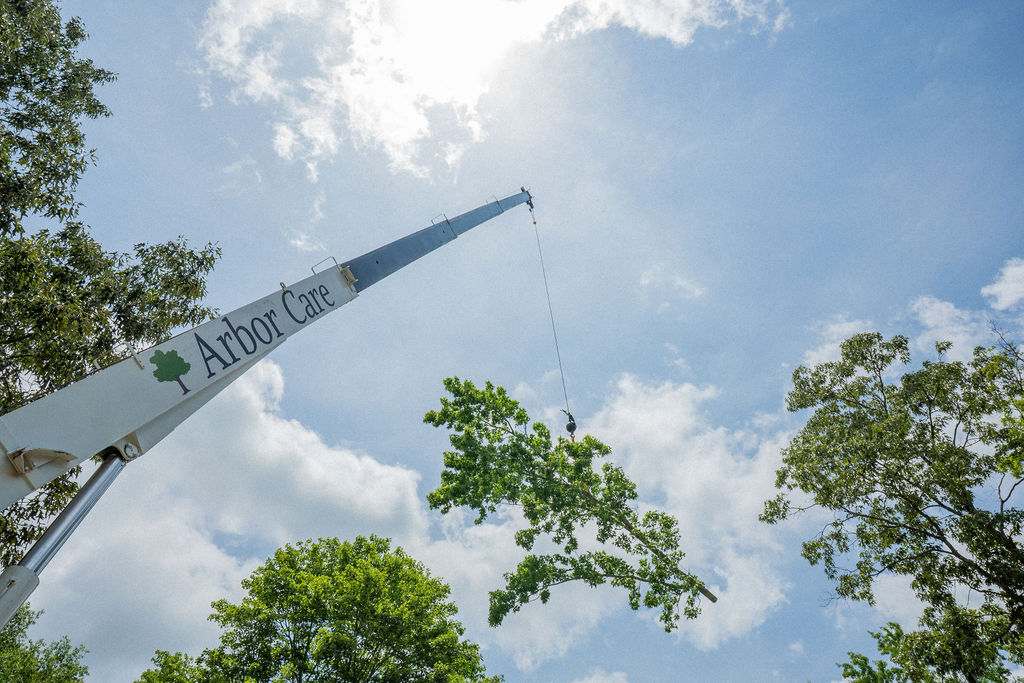
Whether you have a tree that is dead, diseased, storm-weakened, or creating a safety concern, JM Arbor Care can help. With over 25 years of combined experience, our certified arborists use specialized equipment, including cranes, aerial lifts, and spider-lifts, to safely and efficiently remove trees, even in tight spaces.
Our safety-first approach helps homeowners address hazardous trees before winter weather creates additional risks.
GET A FREE TREE QUOTE!
No appointment necessary to receive a quote on tree service. Just complete the Hassle-Free Estimate form below, and JM Arbor Care will handle the rest.
WHY CHOOSE JM ARBOR CARE FOR TREE REMOVAL IN ROCK HILL AND CHARLOTTE?
LARGE AND SMALL TREE REMOVAL
From towering trees to small shrubs, we have the equipment and expertise to handle trees of all sizes. Whether your tree is dead, dying, or located in a challenging area, our team is equipped to remove it safely.
TIGHT SPACE TREE REMOVAL
When trees are near homes, sheds, fences, or power lines, removal requires precision and experience. Our lightweight, remote-controlled spider-lift can access spaces as narrow as a fence gate while reaching heights of over 60 feet, making tree removal safer and more efficient.
DEAD, DYING, AND HAZARDOUS TREE REMOVAL
Dead and declining trees can develop weakened branches, decay, and structural instability. Winter winds, ice, and severe weather may place additional stress on these vulnerable trees, increasing the risk of falling limbs or tree failure.
Our certified arborists evaluate trees for signs of decline and structural weakness to determine when removal is the safest option.
THOROUGH CLEAN-UP GUARANTEE
We don’t just remove your tree; we clean up after ourselves. Our crew will ensure your property is cleaner than before we started, hauling away all green waste and debris generated during the removal process.
WHY WINTER IS A GOOD TIME TO EVALUATE HAZARDOUS TREES
Winter provides an opportunity to identify and address tree safety concerns before they become emergencies.
When deciduous trees lose their leaves, structural issues such as cracked branches, deadwood, and weak branch attachments may become more visible. Dead or dying trees can also become increasingly unstable as decay progresses, making them more vulnerable to high winds and winter storms.
A professional tree evaluation can help:
- Identify Hidden Hazards: Spot dead branches, structural defects, and signs of decay that may be easier to see without foliage.
- Reduce Winter Storm Risks: Address weakened or hazardous trees before strong winds, ice, or severe weather cause additional damage.
- Protect Your Property: Reduce the risk of falling trees or branches damaging homes, vehicles, fences, and other structures.
- Plan Proactive Removal: Schedule necessary tree removal before a hazardous tree becomes an emergency.
Not every declining tree needs to be removed. Our certified arborists can help determine whether pruning, Plant Health Care, or removal is the best solution.
SIGNS YOUR TREE MAY NEED TO BE REMOVED
If you’re unsure whether a tree should be removed, look for these common warning signs:
- Dead or Dying Branches: Large sections of deadwood or branches that repeatedly break and fall.
- Failure to Leaf Out: Branches that do not produce leaves during the growing season or show significant signs of decline.
- Visible Decay: A rotten base, deep cracks, missing bark, cavities, or holes in the trunk.
- Fungal Growth: Mushrooms or other fungal growth near the base that may indicate underlying decay.
- Significant Leaning: A tree that has recently begun leaning or shows signs of instability.
- Damaged or Exposed Roots: Root damage or movement that may affect the tree’s stability.
- Proximity to Structures: A compromised tree located near your home, driveway, sidewalk, or utility lines.
- Previous Storm Damage: A tree that lost a large section of branches or suffered structural damage during a storm.
A leafless tree is not necessarily dead. Many healthy trees naturally lose their leaves during winter. A professional arborist can help distinguish normal dormancy from signs of decline.
If you notice any of these concerns, schedule a professional evaluation to determine whether removal is necessary.
SAFE, CERTIFIED, AND FULLY INSURED TREE REMOVAL SERVICES
At JM Arbor Care, safety is our top priority. Our crews are led by ISA Certified Arborists, and we are fully insured to help protect your property throughout the removal process.
We participate in ongoing safety training through JM Arbor Care University to stay ahead of industry standards. As a TCIA Accredited Tree Care Service, we are committed to providing professional tree removal services that meet the highest standards of safety, care, and quality.
Call (803) 594-8256 today to request a tree removal estimate in Rock Hill, SC, and surrounding areas.
Click to call now!
GET A FREE ESTIMATE